
Editorial Policy
How SG Containers Review picks topics, cites sources, states equipment conditions, handles bylines and change notes, and corrects errors in its guides.
This policy describes how SG Containers Review, a publication operated by DeltaSpark, researches and publishes its guides on glass packaging and bottling-line equipment. See also About and Disclosures.
How we choose topics
Topics start with questions that buyers and plant teams ask: how to match a bottle or jar to a closure, what to check before a supplier enquiry, or how one line stage affects the next. Each guide is written around a specific reader question, not around keywords alone. We also test a topic against the available sources. If we cannot find identifiable documents that support an answer, we narrow the question or do not publish the guide.
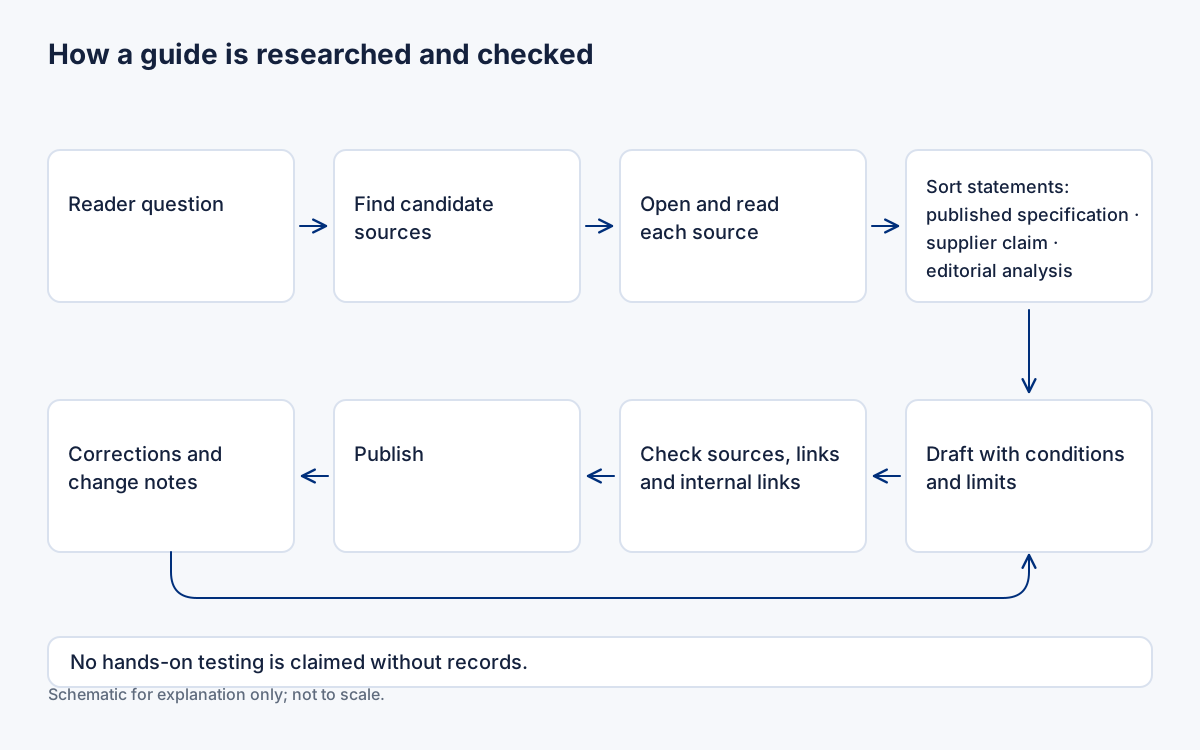
How a guide is researched and checked
Every guide follows the order shown in the diagram. We start from the reader question and look for sources that could answer it. Each source is opened and read, not cited from a search snippet or from another site’s summary of it. Statements taken from the sources are sorted into the three kinds described below, and the draft states the conditions and limits that apply to each. Before publication, the cited sources and links are checked again. After publication, corrections and substantive updates are recorded as change notes at the end of the guide.
Older material, including historical reporting, can suggest a question worth answering, but we research the answer again from current sources instead of rewriting old pages.
Sources and attribution
We draw on identifiable sources: manufacturer documentation, industry-body publications, applicable standards and clearly attributed reporting. Each guide lists its main sources in an “Evidence and limitations” section at the end, with links where available. That section also states what the sources do not establish, so you can see where a guide stops.
The table sets out how we treat each type of source and how it is labeled in the text.
| Type of source | How we use it | How it is labeled |
|---|---|---|
| Standard or industry-body publication | As the reference for definitions, dimensions, test methods and requirements, within the scope the document states | Named and attributed, with the scope and edition where relevant |
| Manufacturer technical documentation | For published specifications of a named model or product, under the conditions the document gives | Attributed to the manufacturer as a published specification |
| Manufacturer or supplier marketing statements | Only to report what a company says about its own products | Labeled as a supplier claim |
| Reporting by other organizations | To describe projects or events, with the facts attributed to the reporter | Attributed to the reporting organization, never presented as our own project |
| Our own comparison or reasoning | To connect sources, compare options and explain trade-offs | Labeled as editorial analysis |
Specifications, supplier claims and editorial analysis
We keep three kinds of statement apart. Published specifications are figures and requirements in a manufacturer’s documents or a standard, attributed to that source. Supplier claims are performance or quality statements a company makes about its own products, labeled as claims. Editorial analysis is our own comparison and reasoning, labeled as such.
A supplier claim does not become a fact because several suppliers make a similar one, and an editorial comparison is not presented as a measured result. When we describe a claim, we say who made it.
How numbers are handled
A number appears in a guide only with its source and the conditions it applies to. For equipment, that means the model, configuration, product, container format or operating condition named in the source. A filling speed, for example, means something only for a stated container, product and line arrangement, so we quote it with those details or leave it out.
Where no source supports a figure, we do not supply one. We do not invent general values for speed, accuracy, breakage rate, maintenance interval or payback period. If a range is quoted, we say whose range it is and what it covers. We do not average figures produced under different conditions by different sources, and we do not convert or round a figure so that it implies more precision than the source gives.
Equipment parameters and conditions
Equipment parameters are stated with the conditions they apply to: model, configuration, product, container format or operating condition. If the source does not give the conditions, we say so.
When sources disagree
Sources sometimes disagree, for example when two standards define a dimension differently or a manufacturer’s document differs from a trade publication. We report the disagreement instead of choosing silently. The guide states each position with its source, gives the likely reason where the sources allow it (a different edition, scope or measuring method), and says what you should confirm with the supplier or the relevant standard. If the difference matters to a decision, it is also listed in the “Evidence and limitations” section.
How supplier claims are labeled
Supplier claims carry attribution in the sentence itself, for example “the manufacturer states that” followed by the claim and the document it comes from. Where a claim cannot be checked against an independent source, the guide says so. A claim that appears only in promotional material is not used as the basis for comparing suppliers. Naming a manufacturer as a source is not an endorsement. Relationships that could affect how a company is presented are covered in Disclosures.
No claims of testing without records
A guide or comparison is not evidence of hands-on testing. We do not claim factory trials, equipment performance verification or project delivery unless documented records exist, and we say so when they do. Projects reported by other organizations are attributed to them.
Bylines
Guides are published under the byline “By SG Containers Review Editorial”, the editorial byline used by DeltaSpark. It is not a fictitious person and does not imply an undisclosed engineering team. We name an individual author, or say that an engineer reviewed an article, only when that person took part, the scope of the review is clear and they have agreed to be named. The About page explains the byline further.
Dates and change notes
Guides on this site do not display publication dates, and we do not declare them in the page’s structured data. A guide is meant to be read for the sources and conditions it states, and a date at the top can suggest a currency the guide does not claim. Dates of historical events mentioned in an article, such as the year a standard was issued or a company announced a project, are part of the content and are stated where they matter.
When a guide changes substantively, we add a short change note at the end stating what changed and why, for example a corrected figure, a newer edition of a standard, or a source that is no longer available. The note names the section affected but carries no date. Changes that do not affect meaning, such as fixing a typographical error or a broken link, do not get a note. Notes stay on the changed page, so you can see what differs from a version you may have read earlier.
Corrections
If you believe a statement is wrong or poorly sourced, use the Contact page and identify the article and the statement. We review the source, correct confirmed errors and note substantive corrections on the page. If we decide no change is needed, we will say why when you ask.
Illustrations and diagrams
Cover illustrations are generated. Diagrams are schematic drawings created for explanation. Neither depicts a specific plant, product, supplier’s equipment or project. A diagram shows the order of steps or the relationship between parts and is not drawn to scale. Technical figures that appear in a guide come from the cited sources and are attributed to them.
Where to read next
The guides this policy covers begin with Glass Containers and continue through Manufacturing, Bottling Lines and Buying Guides. How the site handles reader information is described on the Privacy page.