
Glass Bottle Specifications: A Checklist for Supplier Enquiries
A checklist of what to state in a glass bottle enquiry: drawing dimensions, capacity and fill point, finish, color, strength, decoration, quality and packing.
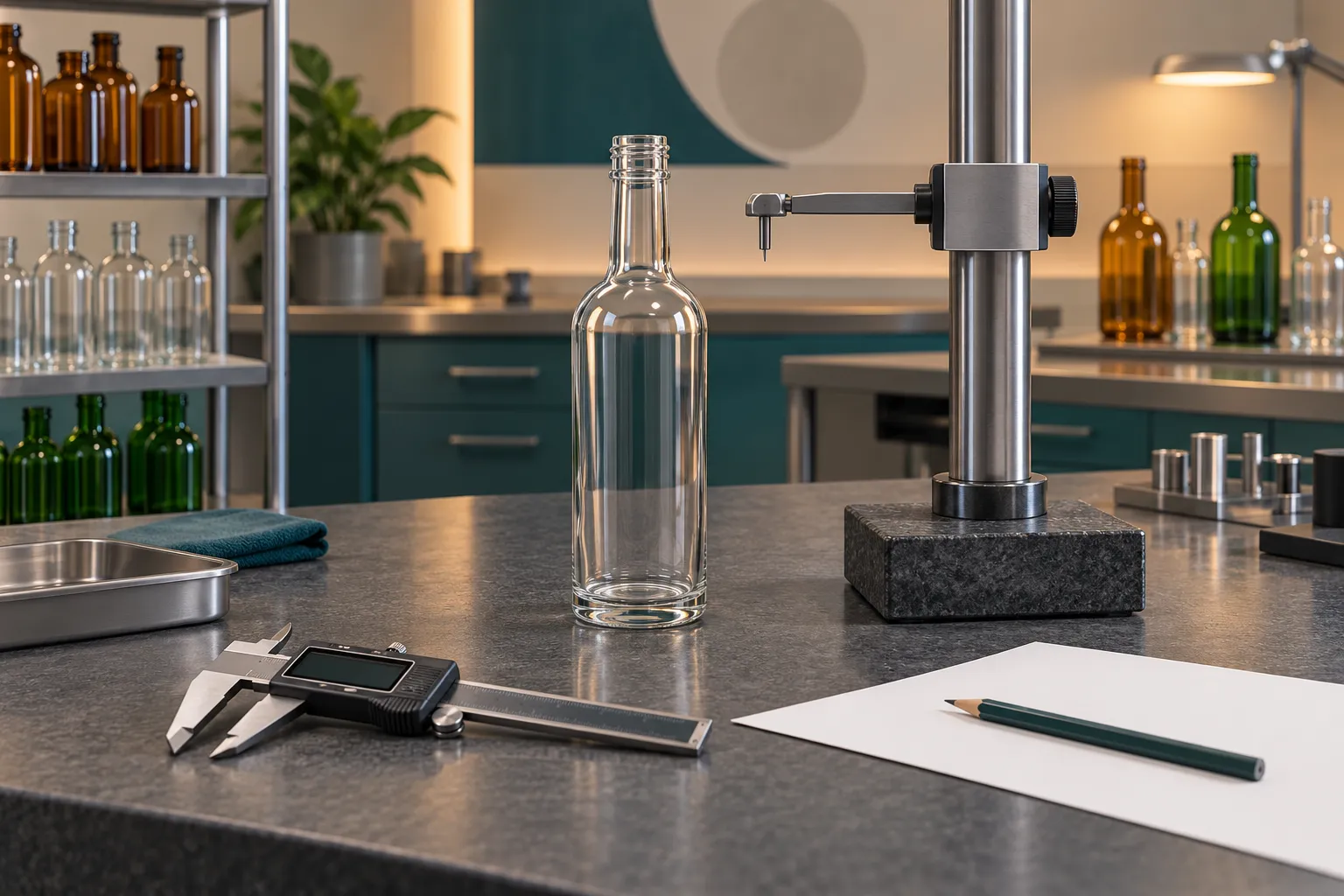
A usable bottle enquiry gives a supplier enough to quote the same item every other supplier is quoting. It states the container dimensions and tolerances, capacity and fill point, finish designation, glass color and weight, strength and quality requirements, decoration, and how the bottles will be packed and delivered. Where a standard governs a value, name the standard. Where you have no requirement yet, say so instead of leaving the line blank.
The checklist below is grouped the way a bottle drawing and a quality agreement are usually organized, and it works for stock and custom bottles. If you are still choosing a shape or sourcing route, start with glass bottle types and sourcing. Read the finish section below before you fix a closure.
Start with the drawing
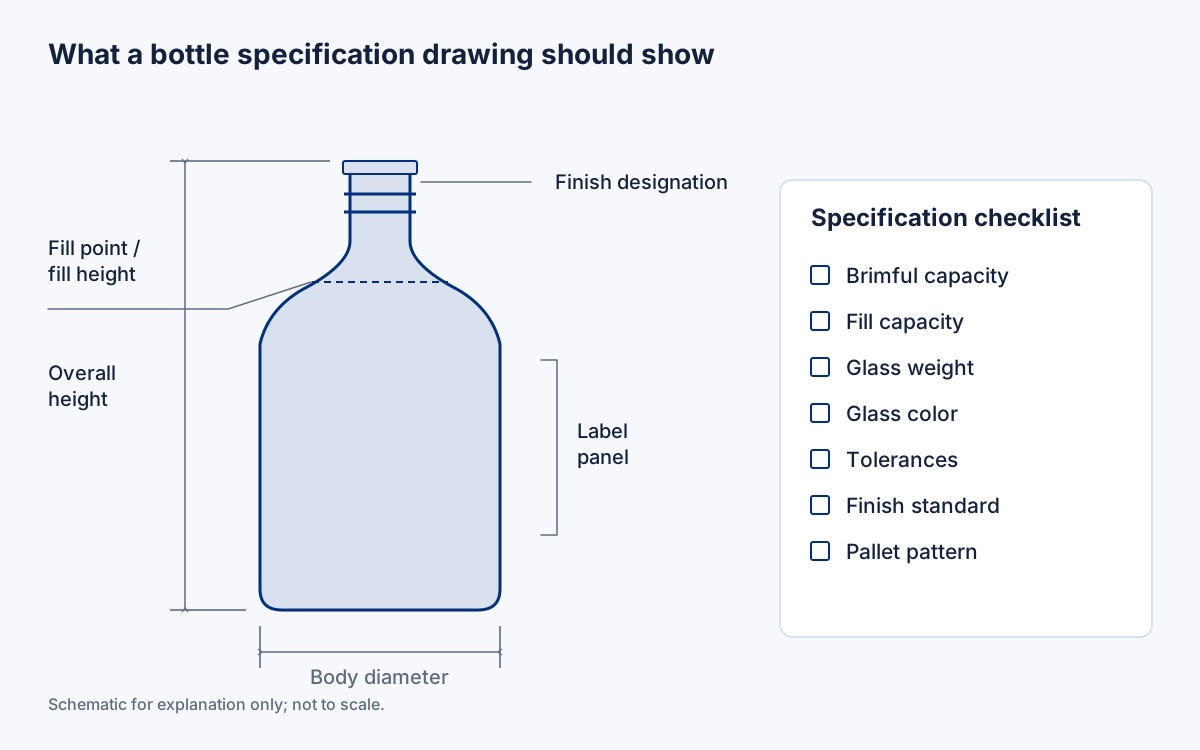
Ask each supplier for a drawing of the exact article and quote against it. Every other line in the enquiry should point back to that drawing.
Cetie, the European glass packaging technical body, lists a data sheet whose stated aim is to help customers build meaningful specifications for the manufacturing and filling of glass containers (DT12.00). It also lists data sheets on standard tolerances for capacity, height, diameter, verticality and base-to-mouth parallelism of the finish (DT02.00), and a glossary of glass container visual defects (DT26.01) that notes severity values should be agreed between the glassmaker and the filler. A specification can cite these references, and they are free to download with an account.
The specification checklist
Container geometry and weight
| Item | What to state | Notes |
|---|---|---|
| Article reference | Supplier article number or your drawing number and revision | Prevents quoting from different versions |
| Overall height | Nominal value and tolerance | Tie to line and case limits |
| Body diameter or width | Maximum, with tolerance; for non-round bottles, both axes | Starwheel, guide and carton fit |
| Verticality and base-to-mouth parallelism | Required limits or the standard to follow | Affects capping and labeling; covered in Cetie DT02.00 |
| Weight | Target and tolerance, or “supplier standard” | A lower weight changes other properties; see lightweight wine bottle guidance in lightweight wine bottles |
| Base and push-up | Profile, and whether a flat or recessed base is required | Affects conveying and stability |
Capacity and fill
| Item | What to state | Notes |
|---|---|---|
| Nominal capacity | The labeled volume | Legal or labeling reference |
| Brimful capacity | Target and tolerance | The volume to the rim; ask how it is measured |
| Fill point or fill height | Distance from the top of the finish to the product level | Needed for filler setup, see glass bottle filling machines |
| Headspace requirement | Required headspace, product temperature and expected change | Cetie’s FS07.00 gives design headspace recommendations for liquids in bottles and jars; for vacuum-seal food jars the filler and cap supplier own the fill level |
Cetie DT09.00 gives factors to convert the mass of water to true volume, and refers to ISO 8106 for gravimetric capacity determination. Ask which method the supplier uses to report capacity so numbers are comparable across quotes.
Finish and closure
| Item | What to state | Notes |
|---|---|---|
| Finish designation | A GPI code such as 28-400 or a named European finish | Do not give a diameter alone; see bottle neck finishes and closure compatibility |
| Closure type | Continuous thread, lug, crown, cork or ROPP | Cetie DT31.00 lists the main sealing types on glass containers |
| Closure and liner | Maker, part number, liner material | Needed to confirm compatibility with the supplier |
| Sealing surface | Required planarity or finish quality | Cetie’s flaconnage (small molded bottle) data sheet notes that finish planarity must meet the sealing system, especially for hot sealing or twist-off; ask whether the same applies to your container |
| Minimum bore | If a filling tube or insert is used | Cetie lists minimum through-bore data for BVP and BVS finishes |
Glass color and appearance
| Item | What to state | Notes |
|---|---|---|
| Color name | Flint, amber, a green shade, or a supplier color | Names differ by supplier; Berlin Packaging lists flint, super flint, amber and several greens for wine |
| Color control | A sample or a measured reference | Cetie DT30.00 covers colour measurement of glass packaging |
| Surface treatment | Hot-end and cold-end coating requirements | Cetie DT13.00 describes both; relevant to line handling |
Strength and special requirements
| Item | What to state | Notes |
|---|---|---|
| Internal pressure | Product carbonation or filling pressure | Cetie DT11.00 sets procedures for beverages above 2 g/l CO2 |
| Vertical load and impact | Required test method or limits, if any | Cetie lists standard test data sheets in its strength and performance category |
| Thermal conditions | Hot-fill, pasteurization or cold-fill | State the temperatures used in the process |
| Product contact | Food or beverage use and any regulatory requirement | State the market the product will be sold in |
Decoration, labeling and marking
| Item | What to state | Notes |
|---|---|---|
| Label type and panel | Pressure-sensitive, wet-glue or sleeve; panel size and position | See bottle labeling methods |
| Alignment features | Spotting bars or locating dimples, if the line orients the bottle | Cetie DT19.01 and DT20.00 define bars and dimples |
| Printing, embossing or frosting | Artwork, position and method | Confirm who supplies tooling |
| Laser marking | Areas to avoid and cold-end codes | Cetie DT28.00 gives areas to avoid for laser marking |
Quality, packing and delivery
| Item | What to state | Notes |
|---|---|---|
| Defect classification | Critical, major and minor defect definitions and sampling plan | Agree with the supplier; Cetie glossaries support this |
| Certificates | Certificate of conformity, test reports, traceability | Specify what must ship with each lot |
| Packing | Pallet pattern, layer pads, tops, bulk or cased | Match to your depalletizing method |
| Quantity and schedule | First order, annual forecast, delivery points | Needed for stock versus custom comparison |
| Samples | Number, source (production or pre-production) | State that samples must come from production molds |
Published requirement, supplier claim and your requirement
Keep three kinds of statement separate in the enquiry and in your notes. A published standard or data sheet is a reference both sides can read. A supplier’s catalog figure is a supplier claim, so request the drawing behind it. Your own requirement, such as a maximum height for your line, is yours to set, and you should write it as a requirement, not as a general fact. Verallia, a glass maker, describes a standard catalog and customized bottles with specific shapes and colors, which shows that the starting point (stock or custom) changes who owns the drawing and the tolerances. The cost and document differences are covered in stock vs. custom glass bottles.
Questions to send suppliers
- Please provide the drawing for this article, including the revision, finish designation, brimful capacity, weight and tolerances.
- Which standard or internal specification governs your dimensional and capacity tolerances?
- How is brimful capacity measured, and what are your reported results for recent lots?
- What is the fill point for the nominal capacity, and what headspace do you recommend for my product and filling temperature?
- What defect classification and sampling plan do you use, and can they be written into the supply agreement?
- What strength tests do you run, and what pressure rating applies if my product is carbonated?
- Which closure and liner combinations have you validated on this finish?
- What are the packing options, and what documentation ships with each lot?
- If I change the closure, label type or fill temperature later, what needs to be revalidated?
When the bottle is part of a line purchase, the same data feeds the equipment request in the bottling equipment RFQ checklist.
Evidence and limitations
This checklist is an editorial synthesis of published data sheets and distributor and supplier descriptions. It cannot replace the standard, the drawing or the supply agreement. The relevant standards depend on the market: Cetie documents are European and voluntary, and North American buyers often use GPI finish conventions and supplier-specific drawings. Requirements for strength, headspace, color and defects depend on the product, the line and the supplier, and the values must be agreed in writing for each item.
- Cetie general data sheets (DT), Cetie: tolerances, specification preparation, capacity conversion, colour measurement, surface treatment, sealing types, spotting bars, laser marking and defect glossaries.
- Cetie recommendation data sheets (FS), Cetie: headspace recommendations and mass-to-capacity guidance.
- Cetie finish data sheets (GME), Cetie: finish specifications and minimum through-bore information.
- Wine Bottle Sizes, Shapes and Colors Guide, Berlin Packaging: glass color names and capacities (distributor description).
- Verallia bottles, Verallia: supplier description of standard and customized bottle offers.
- Guide to Bottle Neck Finishes, Thread Sizes, & Dimensions, Paramount Global: finish designation format and the need for the I dimension for filling-tube clearance (distributor guide).
Related guides
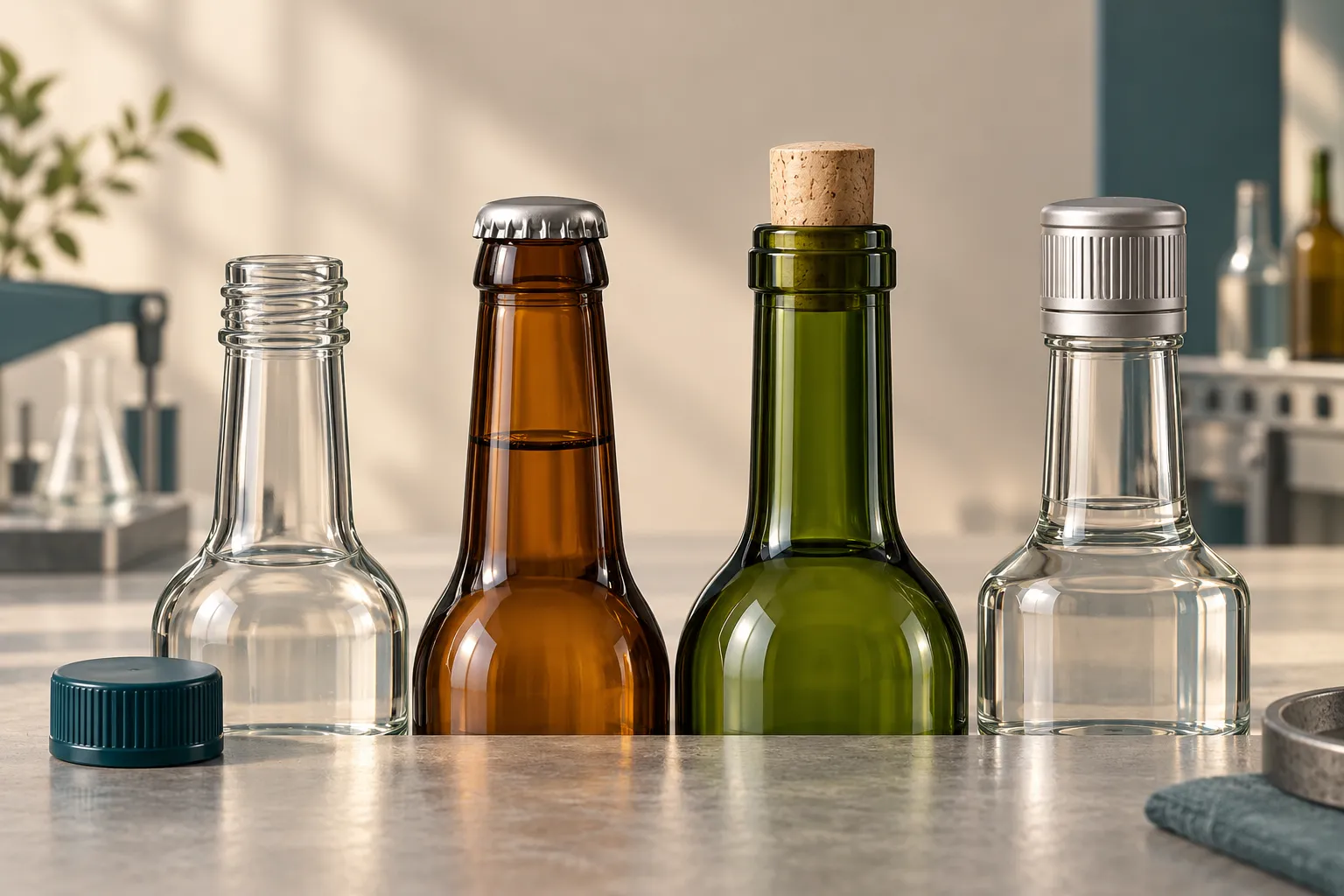
Bottle Neck Finishes and Closure Compatibility
How to read finish designations such as 28-400 and the T, E, I, H and S dimensions, and why a matching nominal diameter does not prove a closure fits.
Read the guide
Bottling Equipment RFQ Checklist: Comparing Supplier Proposals
How to write a bottling equipment RFQ so suppliers quote the same inputs, scope and performance basis, with a matrix for FAT, SAT, spares and warranty.
Read the guide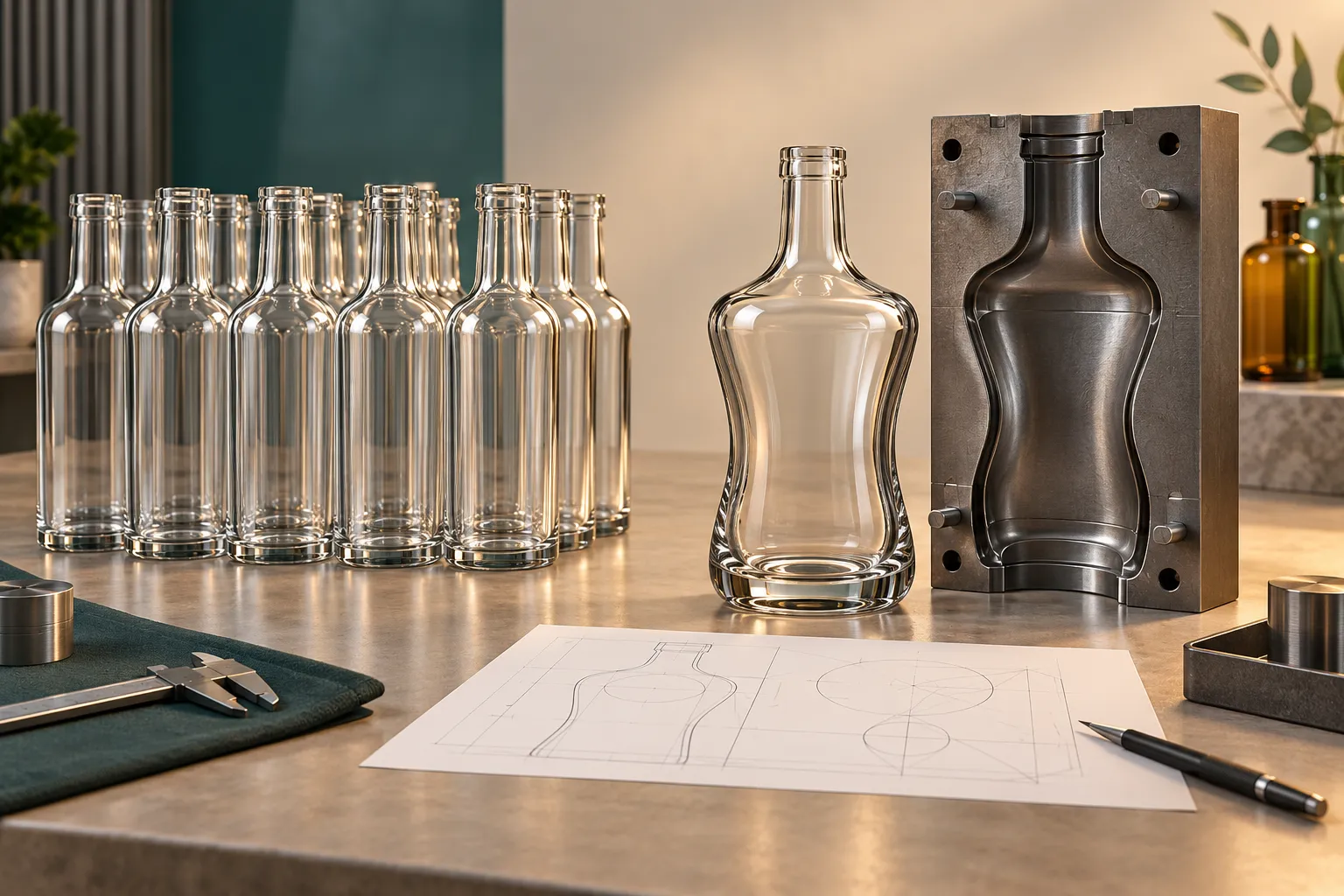
Stock vs. Custom Glass Bottles: What to Compare Before Ordering
Compare stock and custom glass bottles on tooling ownership, minimum quantities, sampling, documentation, line trials and supply continuity before you order.
Read the guide