
Bottling Equipment RFQ Checklist: Comparing Supplier Proposals
How to write a bottling equipment RFQ so suppliers quote the same inputs, scope and performance basis, with a matrix for FAT, SAT, spares and warranty.

Supplier proposals for a bottling line are rarely comparable as received. One quote may include controls, trials and spare parts, another may list only the machine, and a third may define output on a different bottle or product. To make them comparable, send every supplier the same inputs, scope boundaries and performance basis, and ask for answers in a fixed format so differences are visible.
This checklist covers what an RFQ should contain, how to define output and acceptance, which commercial items to request, and how to compare the replies in a matrix. It supports any line described in planning a glass bottling line; individual equipment articles in this publication give the technical questions for each machine.
Start with inputs every supplier receives
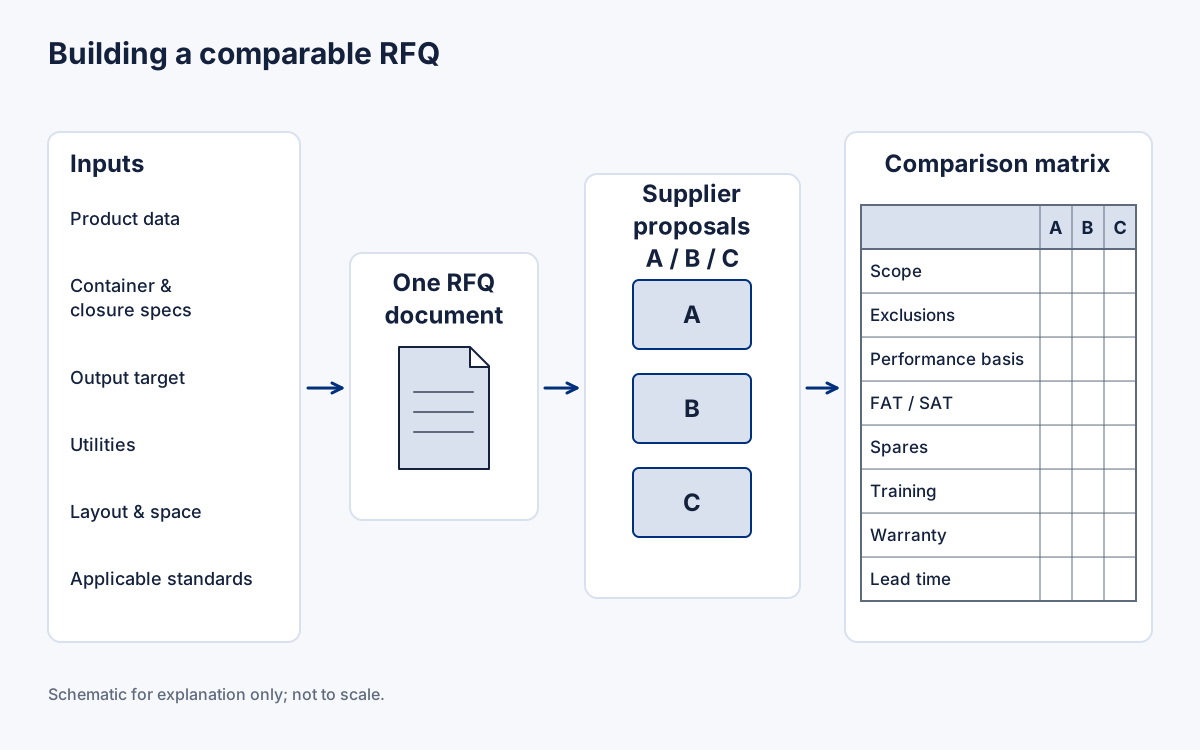
Vague inputs produce quotes with different hidden assumptions. A buying guide for procurement engineers on packaging-labelling.com lists the data that drives most other specifications as the product’s dimensions, weight range, fragility and target units per minute. For a bottling line, build the input pack from these groups:
- Product: type, viscosity or carbonation, temperature at the filler, acidity, particulates, shelf-life and any regulatory category.
- Container and closure: drawings and specifications for the bottle or jar and closure, with finish designation and tolerances. The glass bottle specification checklist shows what a usable drawing contains.
- Output targets: the speed needed at launch and for ongoing production, plus operating schedule.
- Formats: current bottles and any planned additions, covered in bottling-line changeovers.
- Site: floor plan, ceiling height, utilities (power, compressed air, water, steam, CO2 or inert gas), floor drainage, climate and sanitation rules.
- Standards: safety, electrical and food-hygiene standards and the documents to be delivered against them.
- Interfaces: existing equipment upstream and downstream, conveyors, controls and data requirements.
Number each requirement, separate mandatory items from preferred ones, and avoid subjective wording. The same guide advises asking for trials or video runs with your actual product, not a generic sample. Give suppliers a deadline for questions and share answers with all bidders, so everyone prices against the same document.
Define scope boundaries and exclusions
Scope is where proposals differ most. A manufacturing-quote guide from SupplyForge says one supplier may include certification, inspection, finishing and carriage while another excludes them, and recommends normalizing scope before ranking price. For bottling lines, that means asking each bidder to state, line by line, what is in and out of the price.
Ask for a scope table that covers:
- Machines and modules, including conveyors and accumulation between machines.
- Change parts for each format on your list, and tooling for future formats.
- Controls, line integration and software, including data export.
- Installation, commissioning and start-up, and who supplies cranes, labor, utilities and civil work.
- Packaging for shipment, transport, insurance and import documents, on a stated delivery basis.
- Consumables, test materials and trial product for acceptance.
- Items the buyer supplies and items assumed from other vendors.
Ask suppliers to list exclusions and assumptions explicitly. SupplyForge suggests classifying every requirement as compliant, clarified compliant, deviation, exclusion or not stated, and treating “not stated” as an uncertainty rather than an assumption in your favor. Use the same categories in the comparison matrix below.
Performance basis: how output is defined
Throughput is the most quoted figure and the most misunderstood. The packaging-labelling.com guide says rated throughput is typically measured under ideal conditions with consistent product, no changeovers and a trained operator, and that real output is lower once changeovers, operator tasks, product variability and maintenance are included. Its rule of thumb is to plan capacity around 70 to 80 percent of a machine’s rated maximum; treat that as a trade-guide heuristic, not a standard.
Don’t accept a rated speed on its own. Require each bidder to state the performance basis:
- Which bottle, closure, label and product the figure refers to.
- Whether the figure is nominal, peak or sustained, and over what run time.
- Which stoppages, rejects, changeovers and operator interventions are counted.
- What efficiency measure, such as overall equipment effectiveness, applies, and what reference installations support it.
- What acceptance test run, and under which conditions, proves the claim.
The performance basis applies to the whole line, not a single machine. State how accumulation, rejects and downstream machines affect line output, and ask how the line’s overall figure was derived.
Acceptance testing, documentation and training
FAT and SAT
A factory acceptance test (FAT) checks equipment at the supplier’s workshop against an approved protocol; a site acceptance test (SAT) repeats checks where the equipment will run. PMMI’s OpX Leadership Network publishes One Voice protocols for FAT, virtual FAT and SAT expectations, available at no charge and intended to settle criteria and avoid miscommunication that leads to unbudgeted cost and longer timelines. The PMMI announcement of the revised version says it adds a review of OEM and end-user responsibilities and folds virtual FAT in as an appendix.
Put the acceptance basis in the RFQ so suppliers price it: who writes the protocol, which products and bottles are used, run duration and what counts as pass or fail, how open items are closed, and what is repeated on site. Linking payment milestones to acceptance results keeps incentives aligned (see below).
Documentation
Request the document list at quotation, not after award: layout and utility drawings, electrical and pneumatic diagrams, software backups, manuals, parts lists, calibration and safety records, hygiene or material certificates, and the format change procedure. Ask which documents are delivered before FAT, before shipment and at handover.
Spares and training
Ask for a recommended spares list by wear part, the supplier’s stocking and delivery commitments, and the service arrangement during warranty. The packaging-labelling.com guide also advises verifying whether installation, training and commissioning are included, and looking beyond figures such as MTBF to spare parts availability and local support. For training, define who is trained (operators, maintenance, controls), where, and how many sessions. PMMI’s OpX group also publishes work on operator training standardization, which is useful when you write training expectations.
Commercial terms
State the commercial basis once and ask all suppliers to follow it.
For the warranty, give the start date (delivery, installation or acceptance), the duration, what it covers (parts, labor, travel) and exclusions such as wear parts and misuse. SupplyForge advises comparing payment milestones and working-capital impact together with price, so propose milestones tied to events such as order, drawing approval, FAT, delivery and SAT, and ask bidders to list their own.
For delivery, state the start point for lead time (order, drawing approval, down payment), the delivery basis and installation timing. SupplyForge notes that suppliers measure lead time from different points. Also ask for lifecycle costs (consumables, energy, expected service and spare costs for a defined period), relevant certifications, and references with similar product and volume.
Comparison matrix
Use one matrix, fill it from each proposal, and mark each row as compliant, clarified, deviation, exclusion or not stated. Rank price only after scope is understood.
| Item | Supplier A | Supplier B | Supplier C |
|---|---|---|---|
| Machines and modules quoted | |||
| Bottle and closure range covered | |||
| Change parts included | |||
| Performance basis (product, speed type, run time) | |||
| Acceptance test (FAT/SAT) scope | |||
| Documentation list and delivery dates | |||
| Spares package and stocking | |||
| Training scope | |||
| Installation and commissioning | |||
| Warranty (start, term, exclusions) | |||
| Payment milestones | |||
| Lead time (and start point) | |||
| Delivery basis | |||
| Deviations and exclusions listed | |||
| Price, on a common basis |
Add application-specific rows for each line type. For wine, beer and sauce lines, see wine bottling equipment for closures and inert gas, beer bottling equipment for oxygen control and stabilization, and sauce and dressing bottling lines for product, hot-fill and vacuum needs. If inspection is in scope, use bottle inspection systems to define what each check covers.
Questions to send suppliers
- Please confirm you received the complete RFQ and state any assumptions that differ from it.
- Please provide a scope table: items included, excluded and supplied by others.
- What is your performance basis (product, bottle, speed type, run time, stoppages counted), and what reference installations support it?
- Please describe your proposed FAT and SAT, including tests, duration, products used and acceptance criteria.
- What documents are delivered, and when?
- Which spares do you recommend for startup and for the first year, and what do you stock?
- What training is included, for whom and where?
- What does the warranty cover, from what start date, and what is excluded?
- What payment milestones do you propose, and what are the lead time and its start point?
- Which items in this RFQ are deviations or not quoted, and why?
Evidence and limitations
This is editorial guidance drawn from public procurement and industry material, not legal or contract advice. The right level of detail, acceptance method and commercial terms depend on project size, supplier, jurisdiction and the equipment involved. Trade-guide rules of thumb and general manufacturing-quote advice are not packaging-industry standards; adapt them to your project and review contract terms with qualified advisers.
- OpX Leadership Network Offers Updated FAT Guidance, PMMI; announces the revised One Voice FAT work product and its purpose.
- One Voice for Acceptance Tests, OpX Leadership Network (PMMI); describes the protocols for FAT, virtual FAT and SAT expectations.
- The OpX Leadership Network, PMMI OpX; lists available work products including operator training standardization.
- Packaging Machinery Buying Guide for Procurement Engineers, packaging-labelling.com; trade guide on inputs, throughput, supplier evaluation and an RFQ checklist.
- How to compare manufacturing quotations properly, SupplyForge; general guidance on normalizing scope, compliance matrices, lead time and payment milestones.
Related guides
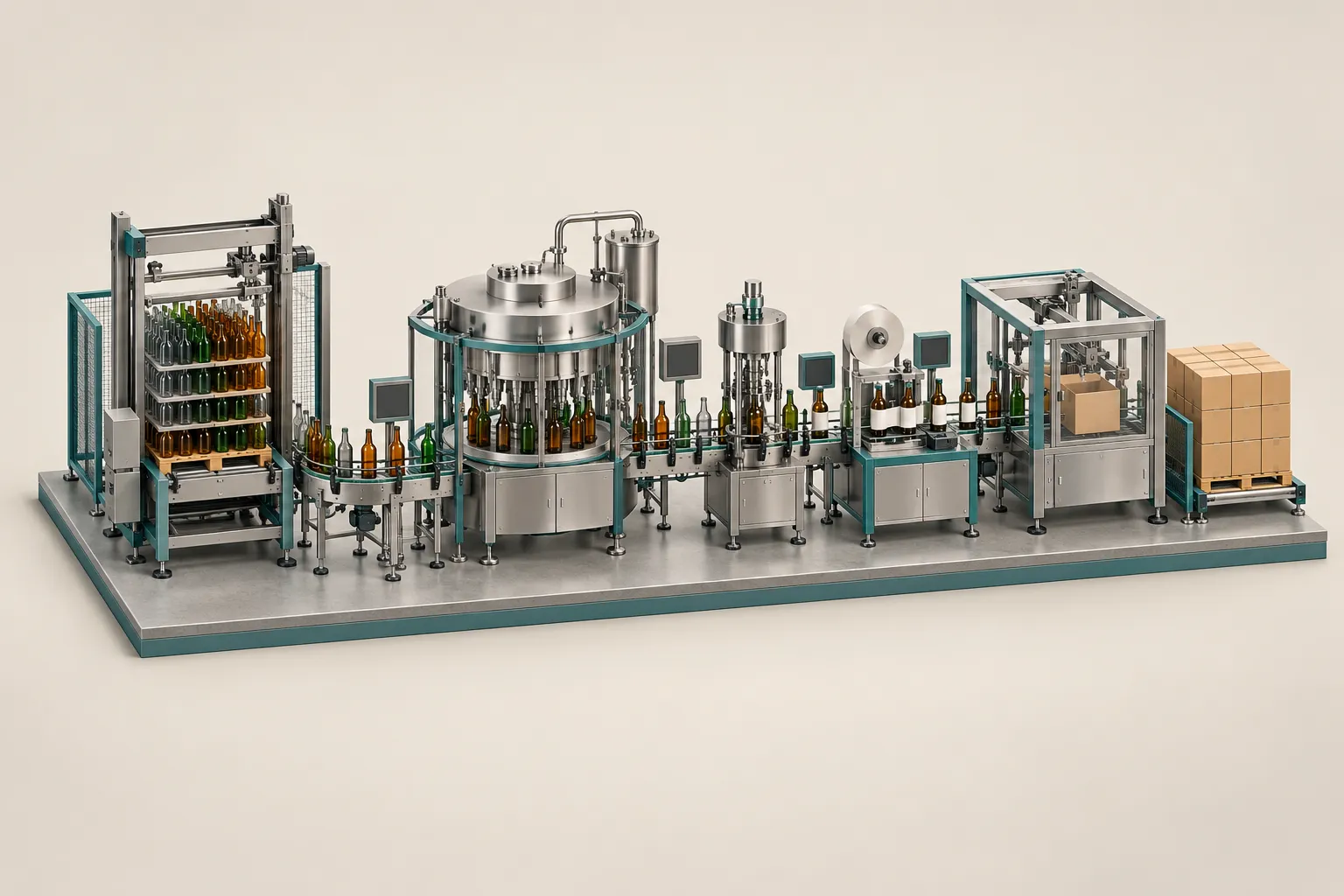
Planning a Glass Bottling Line: From Empty Bottles to Packed Cases
How to divide a glass bottling line into stations, size buffers around the bottleneck machine, and confirm machine interfaces before requesting quotes.
Read the guide
Glass Bottle Specifications: A Checklist for Supplier Enquiries
A checklist of what to state in a glass bottle enquiry: drawing dimensions, capacity and fill point, finish, color, strength, decoration, quality and packing.
Read the guide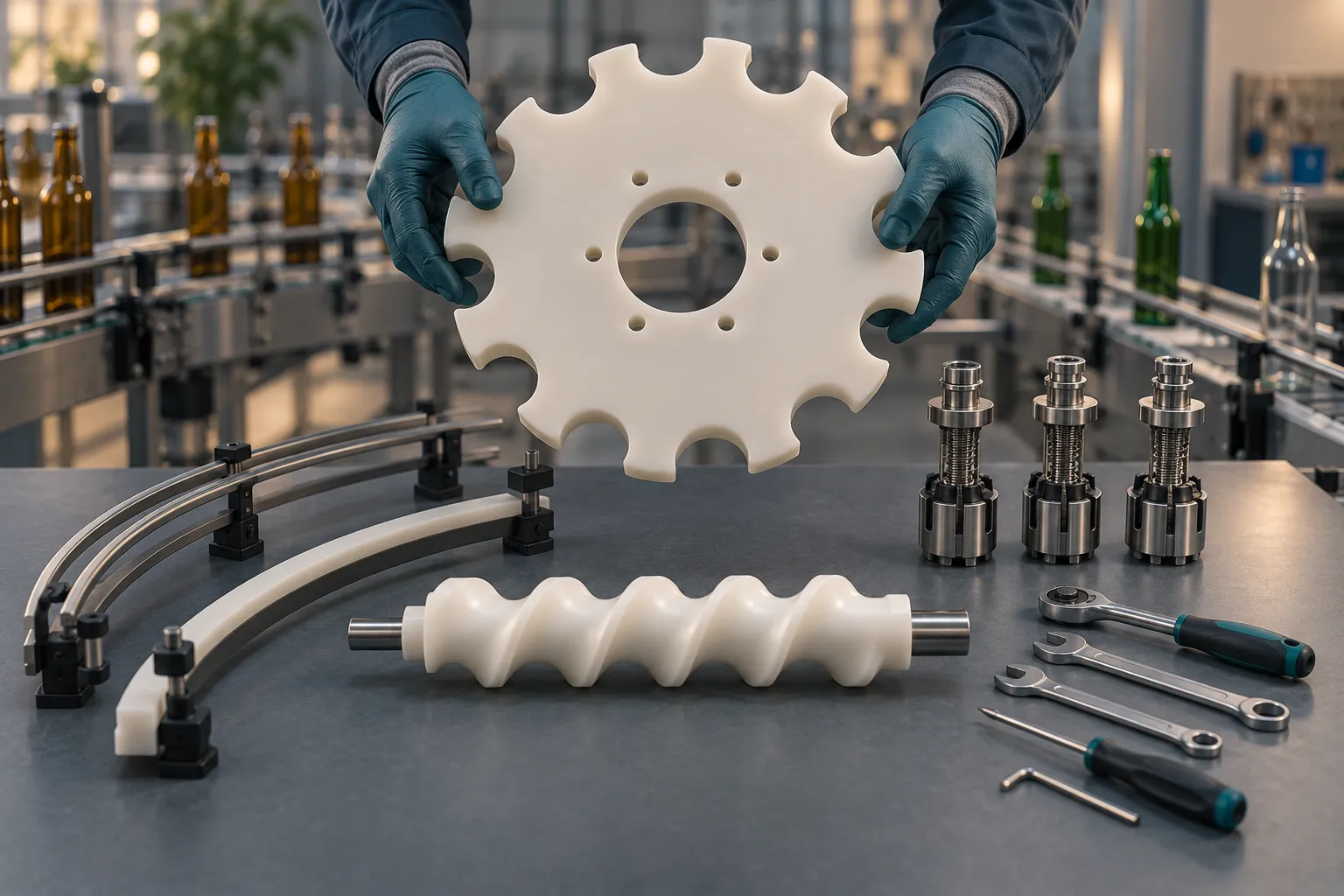
Bottling-Line Changeovers: What to Check Before Adding a New Bottle
Which change parts a new glass bottle touches, which bottle data to check, and how to run and document a trial before the bottle goes into production.
Read the guide