
Recycled Glass Content: How to Read Supplier Claims
How to read a recycled glass content claim: cullet types, plant averages vs product figures, reporting period, colour limits and verification to request.
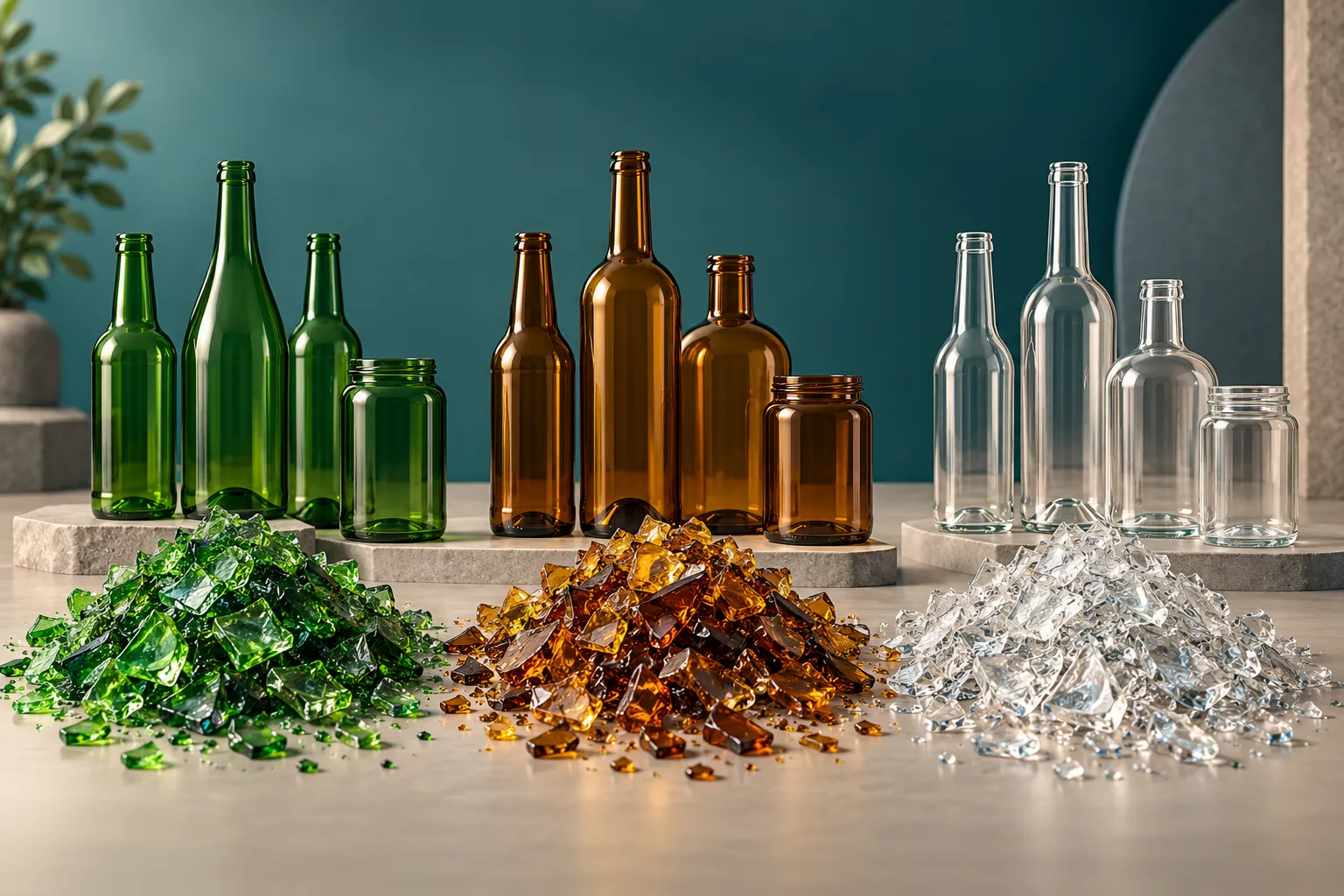
A recycled glass content figure means little unless you know what was counted, where, over what period and for which product. Industry bodies define recycled content differently from a plant’s total cullet use, and national or furnace averages do not guarantee anything about the bottle on your purchase order. A claim such as “contains up to 60% recycled glass” can be accurate and still tell you little about your delivery.
This guide breaks a claim into parts a buyer can question: the type of cullet, the plant or furnace behind the number, the reporting period, whether it is an average or a product-specific figure, colour constraints, and who verified it. It is an editorial reading of published industry and regulatory sources, not an audit method. For where cullet enters the process, see How Glass Bottles Are Made: From Batch Materials to Inspection.
What counts as recycled content
Cullet is broken glass prepared for remelting. The European container glass federation FEVE separates it into two groups: internal cullet, which is rejects from the glass plant’s own process and circulates without leaving the factory, and external cullet, which comes from outside, either pre-consumer (for example breakages on filling or decoration lines, or flat glass from processing) or post-consumer (for example glass collected in bottle banks).
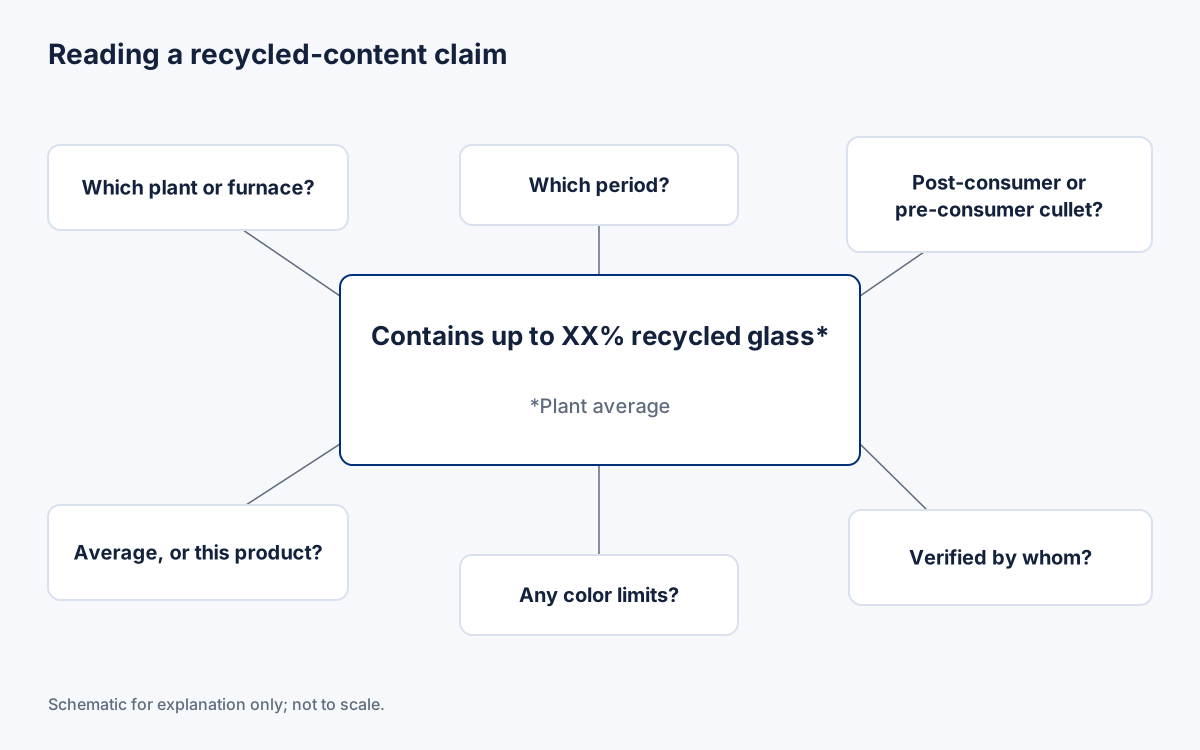
FEVE’s 2020 paper explains how this maps to ISO 14021, the standard for self-declared environmental claims. Under that definition, recycled content is the proportion by mass of recycled material in a product or package, and only pre-consumer and post-consumer material count. Scrap that is generated within the glass process and can be reclaimed there is excluded. FEVE therefore states that internal cullet cannot be included in a recycled content calculation, while cullet from filling and decoration operations returned to a furnace can be included. In FEVE’s formulation, recycled content equals the external cullet rate plus any other recycled material added to the batch.
British Glass describes the same approach for UK container glass: the agreed method (developed with WRAP in 2008 and aligned with ISO 14021) counts glass packaging waste from recycling collections, waste flat glass from glazing and automotive, and calumite, a by-product of iron production. Process losses such as test runs and rejects are returned to the furnace but are not included in the reported figure unless requested and clearly labeled.
| Cullet type | Source | Counted as recycled content? (per FEVE and British Glass) |
|---|---|---|
| Internal cullet | Rejects and scrap from the plant’s own forming and inspection | No |
| Pre-consumer external cullet | Breakage at filling or decoration lines, flat glass processing | Yes |
| Post-consumer external cullet | Household and commercial collection schemes | Yes |
| Other recycled material | For example calumite (iron-industry by-product) | Counted by British Glass and FEVE methods |
Recycling rate is a different number
A recycling rate measures how much glass put on the market is collected for recycling. FEVE explains the difference: the rate reflects collection, while recycled content reflects what goes into furnaces, and some collected glass is used in non-container products such as insulation. The US EPA, using Glass Packaging Institute (GPI) and state data, reported a glass container recycling rate of 31.3 percent for 2018. That is a collection-side statistic and should not be read as the share of recycled glass in a new bottle.
Plant averages versus product-specific claims
Most published figures are averages. FEVE’s paper cites an EU average recycled content of 52 percent from its 2012 life cycle assessment, and says recycled content is product dependent. British Glass states that because cullet availability fluctuates daily, it is not possible to provide individual product recycled glass content, and its national figures are calculated over a calendar year.
A supplier may nevertheless offer a product-level number, for example for a specific bottle range. Ardagh Glass Packaging-Europe’s 2024 lightweight wine bottle announcement, reported by Packaging Europe, cites a recycled glass cullet level of up to 80 percent that varies by colour. Read this as a supplier statement. “Up to” signals a ceiling, not a delivery guarantee, and the announcement gives no reporting period or verifier. Production is stated as being in Germersheim, Germany. Always ask whether the figure is the plant or furnace average, a range for a product family, or a measured value for the production run you will receive.
Reporting period
A figure without a period is incomplete. Calendar-year averages smooth out seasonal and supply variation, while a single production campaign may differ from them. Ask for the period, the plant or furnace, and the colour. If you need a stable number for a sustainability report, ask whether the supplier can commit to an annual average for your product and plant rather than a one-off figure.
Colour and quality constraints
Colour limits how much cullet can be used. British Glass explains that clear glass requires colour contamination in cullet to be kept very low, that there is greater tolerance for green glass, and that amber needs fine control of composition because its colour comes from trace iron oxide and can be affected by organic contamination. It adds that “super-flint” premium glass may sometimes need virgin raw materials only. British Glass also notes that non-container glass, ceramics and pyro-ceramics in cullet can cause inclusions, so cullet quality matters as well as quantity.
GPI says container glass can typically contain up to 70 percent recycled glass, and adds that higher percentages are limited to special batch runs with extremely high-quality cullet to meet colour-consistency goals. For a buyer, a high recycled-content request may conflict with a tight colour or clarity specification. British Glass suggests brand owners explore whether colour and clarity requirements can be adjusted and avoid stipulating minimum recycled content so manufacturers can maximise it when good cullet is available. Whether to specify a minimum is a commercial decision, but you should know the trade-off.
Verification and claim wording
Ask for the basis of any claim and who checked it. The US Federal Trade Commission’s Green Guides (16 CFR 260.13) state that it is deceptive to claim recycled content unless the material has been diverted from the waste stream during manufacturing (pre-consumer) or after consumer use (post-consumer), and that if pre-consumer material is claimed the marketer should have substantiation that it would otherwise have entered the waste stream. For partly recycled products, the Guides say the claim should be clearly and prominently qualified about the percentage by weight, and that any pre-consumer or post-consumer breakdown needs substantiation. One of the Guides’ examples says reuse of spills and scraps within the original process is not a valid recycled-content claim, which parallels the internal-cullet exclusion above. These are US marketing rules; check which rules apply to your market.
Evidence to request:
- The calculation method (ISO 14021-aligned, FEVE or national method) and whether internal cullet is excluded.
- The plant or furnace, colour, period and whether the figure is post-consumer only or total.
- Whether a third party verified the figure and under what scheme, and a copy of the statement.
- Whether the claim applies to your specific bottle or to a plant average.
Questions to send suppliers
- What is the recycled content of this product, expressed as a percentage by mass, and does it include internal cullet?
- Is the figure post-consumer only, or total pre- and post-consumer? Please state both if available.
- Which plant or furnace will make this bottle, and is the figure for that site?
- Is it an annual average, a range, or the result for a production run? What period does it cover?
- How does the figure change with colour (clear, green, amber) for this model?
- Who verified the number, under which method or scheme, and can you provide the document?
- Will you commit to a minimum in the contract, or report the figure after production?
- What recycled-content wording may we use on packaging or in marketing, and what substantiation supports it?
Add any agreed recycled-content requirement and its basis to your bottle specification; Glass Bottle Specifications: A Checklist for Supplier Enquiries shows where such items fit. For the carbon side of lighter and recycled-content bottles, see Lightweight Wine Bottles: What Buyers Should Verify.
Evidence and limitations
This guide explains how to interpret claims; it does not give typical recycled-content values, which depend on the plant, colour, local cullet supply and period. Definitions differ between the ISO 14021-aligned approach used by FEVE and British Glass and other schemes or regional rules, so confirm the method a supplier used. The FTC reference is US marketing guidance, not a glass standard.
- FEVE paper on how to calculate the Recycled Content and the Post-Consumer Recycled Content (PCR) of glass containers, FEVE: internal versus external cullet, ISO 14021 definition, recycling rate versus recycled content.
- Recycled content in glass packaging, British Glass: UK calculation method, calendar-year reporting, colour and cullet-quality limits.
- Facts About Glass Recycling, Glass Packaging Institute: typical recycled content and the note on higher percentages.
- Glass: Material-Specific Data, US EPA: 2018 glass container recycling rate.
- 16 CFR 260.13 Recycled content claims, US Federal Trade Commission Green Guides via eCFR: substantiation and qualification of recycled-content claims.
- Ardagh Glass Packaging-Europe launches lightweight wine bottles with 12% carbon reduction, Packaging Europe: example of a supplier cullet claim that varies by colour.
Related guides

How Glass Bottles Are Made: From Batch Materials to Inspection
A plain-language walk through glass bottle manufacturing: batch, furnace, forehearth, gob feeding, IS machine forming, coatings, annealing and inspection.
Read the guide
Lightweight Wine Bottles: What Buyers Should Verify
Beyond the gram count: glass distribution, strength test evidence, finish fit, line trials and how to read weight and carbon claims on light wine bottles.
Read the guide
Glass Bottle Specifications: A Checklist for Supplier Enquiries
A checklist of what to state in a glass bottle enquiry: drawing dimensions, capacity and fill point, finish, color, strength, decoration, quality and packing.
Read the guide