
Planning a Glass Bottling Line: From Empty Bottles to Packed Cases
How to divide a glass bottling line into stations, size buffers around the bottleneck machine, and confirm machine interfaces before requesting quotes.
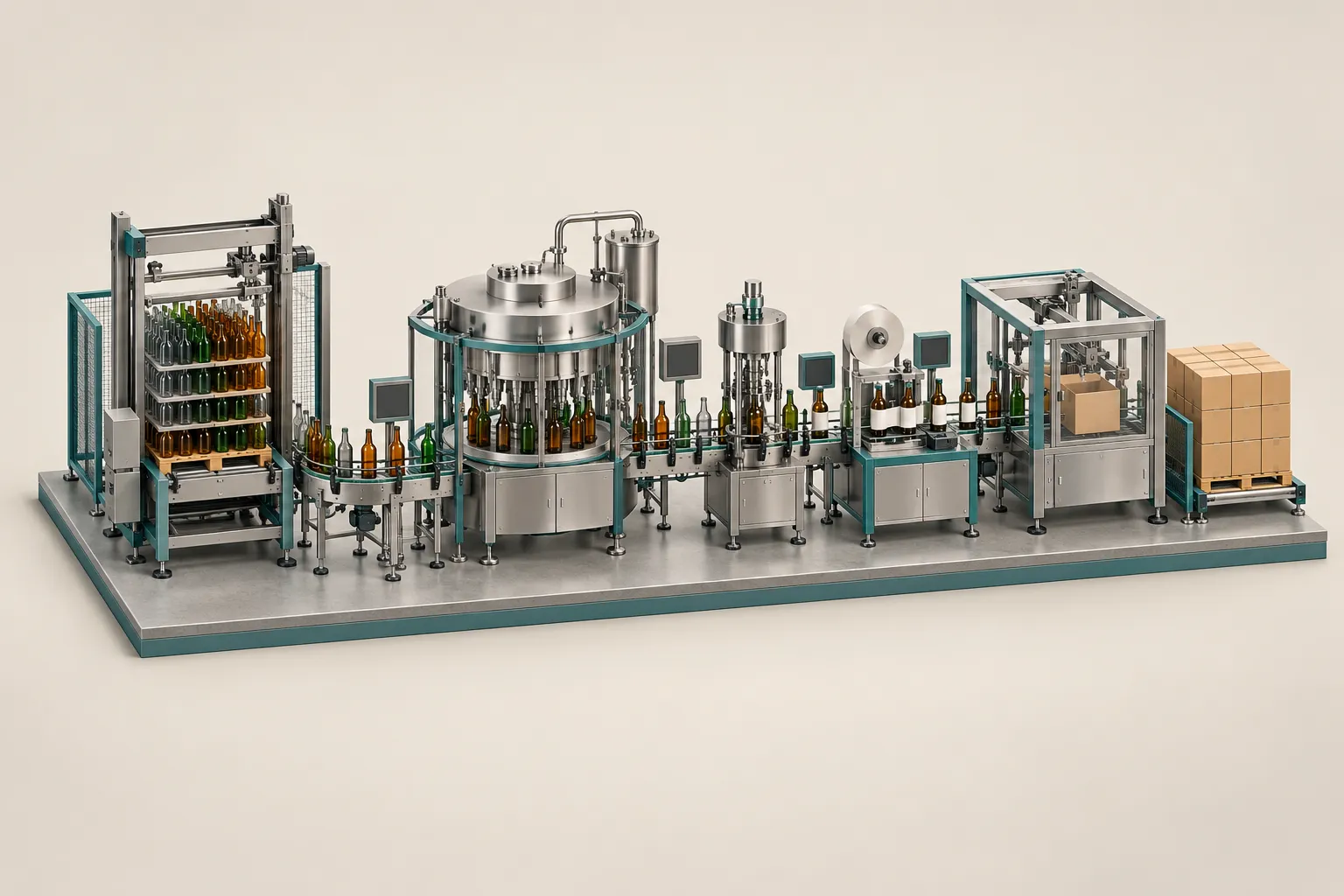
A glass bottling line is a chain of stations: depalletizing and infeed, rinsing or air cleaning, filling, closing, an optional pasteurizing step, labeling, coding, inspection, case packing and palletizing. Plan it by listing those stations in order, deciding which one will set the pace of the whole line, and then confirming what each machine hands to the next one: bottle, closure, product, signal and space.
Plans usually go wrong at the interfaces. A filler, a capper and a labeler can each look adequate on its own data sheet and still perform poorly together if the bottle is not presented the same way to every machine, if buffers are missing, or if the machines cannot exchange stop and start signals. This guide covers the stations, how to size the line around a bottleneck, and what to settle before you ask suppliers to quote.
The stations, in order
A bottling line moves a bottle through the same basic sequence whatever the product. One winery-oriented textbook lists the main operations as decasing or depalletizing, dedusting or rinsing, filling, corking or capping, labeling, and capsuling or foiling, and notes that lines may run in a straight line or in a U-shape that returns finished bottles to near where empty ones entered. Beer, sauce and spirits lines add or drop steps.
The table lists each station, what it hands to the next one, and where to read more.
| Station | Purpose | Interface to confirm early | Guide |
|---|---|---|---|
| Depalletizing and infeed | Take empty bottles off the pallet and deliver them in a controlled stream | Pallet pattern, tier sheets, bottle height and diameter, transition from bulk to single file | Depalletizers and infeed systems |
| Rinsing or air cleaning | Remove dust and loose particles from empty bottles | Method suited to the product, bottle orientation, drain or extraction needs | No dedicated guide; see below |
| Filling | Put the product in the bottle to a level or volume | Product type, finish, fill point, pressure or temperature conditions | Glass bottle filling machines |
| Closing | Apply and secure the closure | Finish and closure data, torque or vacuum needs, closure feeding | Capping equipment |
| Pasteurizing (optional) | Heat-treat filled, closed bottles when the product requires it | Thermal limits of glass, closure and label; added floor space and buffer | Product- and process-dependent |
| Labeling | Apply the label and any neck or back label | Label panel dimensions, bottle surface, wet or dry conditions after filling | Bottle labeling methods |
| Coding | Mark batch, date or other codes | Where the code goes, what must be readable and when | Planned with labeling and inspection |
| Inspection | Check fill level, closure, label and code | What each check covers, reject method, who validates it | Bottle inspection systems |
| Case packing and palletizing | Pack bottles for shipment and build pallets | Case style, dividers, pallet pattern, wrapping | Case packing and palletizing |
Rinsing or air cleaning and coding do not have dedicated guides on this site. For rinsing, the question to ask is what contamination the empty bottle might carry, and whether a dry or wet method suits your product and your hygiene requirements. For coding, decide early where on the bottle or label the code will sit, because that location affects the labeler, the inspection camera and the case packer.
Line flow and accumulation
The figure shows the stations in order, with accumulation (buffer) sections between them.
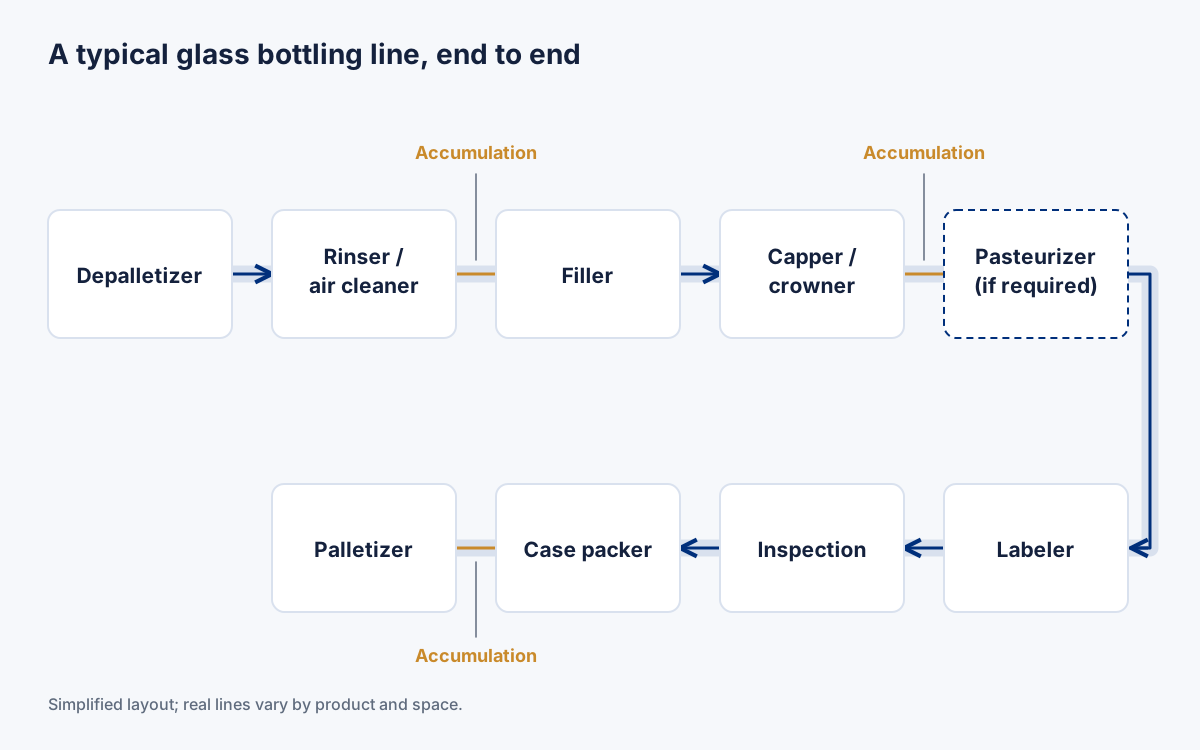
The order is not always fixed. A pasteurizer, when a product needs one, is often placed after closing and before labeling, but the product and the label materials decide that. Also, the buffers are part of the line design, not an accessory added later.
Why the line is sized around one machine
Every line has a slowest or least stable section, and that section governs output. A packaging-automation integrator describes the principle this way: a bottleneck forms when one section consistently limits the throughput of the whole line, and the slowest or most unstable section controls overall output. The same source adds that quoted machine speed can be misleading when it rests on ideal pack dimensions or a narrow format range, and that a line can be constrained by repeated micro-stops and short product-starvation events even when every machine is technically running.
Conveyor maker Nercon makes a related point about short delays. Using its own illustration, a half-dozen stops of 10 minutes each in an eight-hour shift means one hour of lost production. It also notes that machines almost never stop at the same moment, so unplanned and planned stops on separate machines compound. Its article names bulk depalletizers, fillers, wrappers, cartoners, case packers and palletizers as common bottleneck locations.
For planning, this gives a practical sequence rather than a formula:
- Decide which machine you want to be the pacing machine. In many plants this is the filler, because product, pressure and hygiene conditions limit how it can be run, though that is a design choice rather than a rule.
- Collect from each supplier the rated speed of its machine for your bottle, closure and product, and the basis of that rating. Rated speed on a different container does not carry over.
- Check that machines before and after the pacing machine can run at least as fast, so that the pacing machine is rarely starved or blocked. How much margin is needed depends on how often each machine stops and for how long, which a supplier or integrator should quantify for your configuration.
- Look at the end of the line as well. The integrator source notes that secondary and end-of-line equipment often becomes the hidden restriction once upstream equipment is improved.
This is editorial planning logic built on the sources above, not a substitute for a line simulation or a supplier’s performance guarantee.
Accumulation and buffers
Nercon defines accumulation as collecting products for temporary storage, and buffering as the ability to collect products that can be delivered at a different rate than they are received. Its article states that knowing where the bottlenecks sit helps determine where buffers are needed and how much accumulation capacity is required, typically by identifying expected stoppages and their duration, and that manufacturers also use time studies or simulation.
The integrator source cautions that more accumulation is not automatically better: too much can cause product to compress, scuff or lose orientation, and the right design depends on pack type, fragility and where variation is expected. For glass bottles, this is a reason to ask each supplier how its conveying keeps bottle-to-bottle pressure low and whether the buffer is sized for stoppages at the machines on either side of it.
Typical buffer locations to discuss are:
- Between the depalletizer and the rinser or filler, to cover pallet and tier-sheet exchanges.
- On both sides of the filler, so a short stop downstream does not immediately stop filling.
- Between the closing station and the labeler, particularly when a pasteurizer or cooling section is involved.
- Between inspection and case packing, to cover case and divider replenishment.
Interfaces to confirm early
Use this as a working checklist for the first supplier conversation. Each item affects more than one machine.
- Bottle data. Finish, height, diameter, tolerances and label panel, on a drawing, not only a catalog name. See the glass bottle specification checklist for what to collect.
- Closure data. Closure type and size, liner, feeding method and any vacuum or torque requirement, shared with both the filler and capper suppliers.
- Product conditions. Temperature, foaming, pressure, particulates and cleaning needs, shared with the filler and any pasteurizing supplier.
- Machine-to-machine signals. Which machine stops or slows when another is blocked or starved. OMAC’s PackML work, described in a PLCopen document, defines a standard machine state model (stopped, idle, execute, held, suspended, aborted and others) so machines can report operating state in a common way; ask whether suppliers’ machines support it or what they use instead.
- Reject and recovery. Where rejected bottles go, how they are counted and how the line recovers after a reject.
- Layout and utilities. Floor space for buffers and access, and utilities each machine needs.
- Format changes. Which change parts and adjustments each machine needs when a new bottle is added; see the guide on bottling-line changeovers.
Questions to send suppliers
- For our bottle, closure and product, what is the rated speed of your machine, and on what basis was it set (bottle, fill, test conditions)?
- Which machine do you assume is the pacing machine in the proposed line, and what speed margin do you assume for the machines on either side?
- What buffer or accumulation capacity do you include, where is it located, and what stoppage duration is it sized for?
- How does your conveying limit bottle-to-bottle contact and line pressure for glass?
- What signals does your machine exchange with the machines before and after it, and which control standard or protocol do you use?
- What is in scope and what is excluded: conveyors, guarding, controls, installation, acceptance testing and training?
- How are rejected bottles removed and counted, and who validates that the reject system works?
- What change parts and adjustments does a new bottle need on your machine, and what are the documented changeover steps?
You can turn the answers into a comparable request with the bottling equipment RFQ checklist. More material is in the Bottling Lines section.
Evidence and limitations
The structure here is general. Which stations a line needs, their order, and how much buffering is appropriate all depend on the product, the container and closure, the plant layout and the equipment suppliers. Speeds, buffer sizes and reliability figures are deliberately not given: they come from supplier proposals and from line studies, not from general guidance. SG Containers Review analyzes published sources and does not test equipment. The first two sources below are supplier-authored and describe packaging lines broadly, not glass bottling lines specifically.
- Why Do Packaging Lines Bottleneck?, Pac Right Packaging Automation: how the slowest or least stable section limits line output, the role of accumulation, and why quoted speeds can mislead.
- Replace Bottlenecks with Buffer Zones to Increase Throughput, Nercon (Conveyor News, 2010): definitions of accumulation and buffering, short-delay arithmetic, and how buffer locations are sized by expected stoppages.
- The Mapping of the OMAC PackML State Diagram to IEC 61131-3, PLCopen: the OMAC PackML machine state model used for common machine status in production lines.
- Wine Bottling Operations, Apex Learning (Wine Production textbook site): main bottling operations and straight-line versus U-shaped layouts.
Related guides
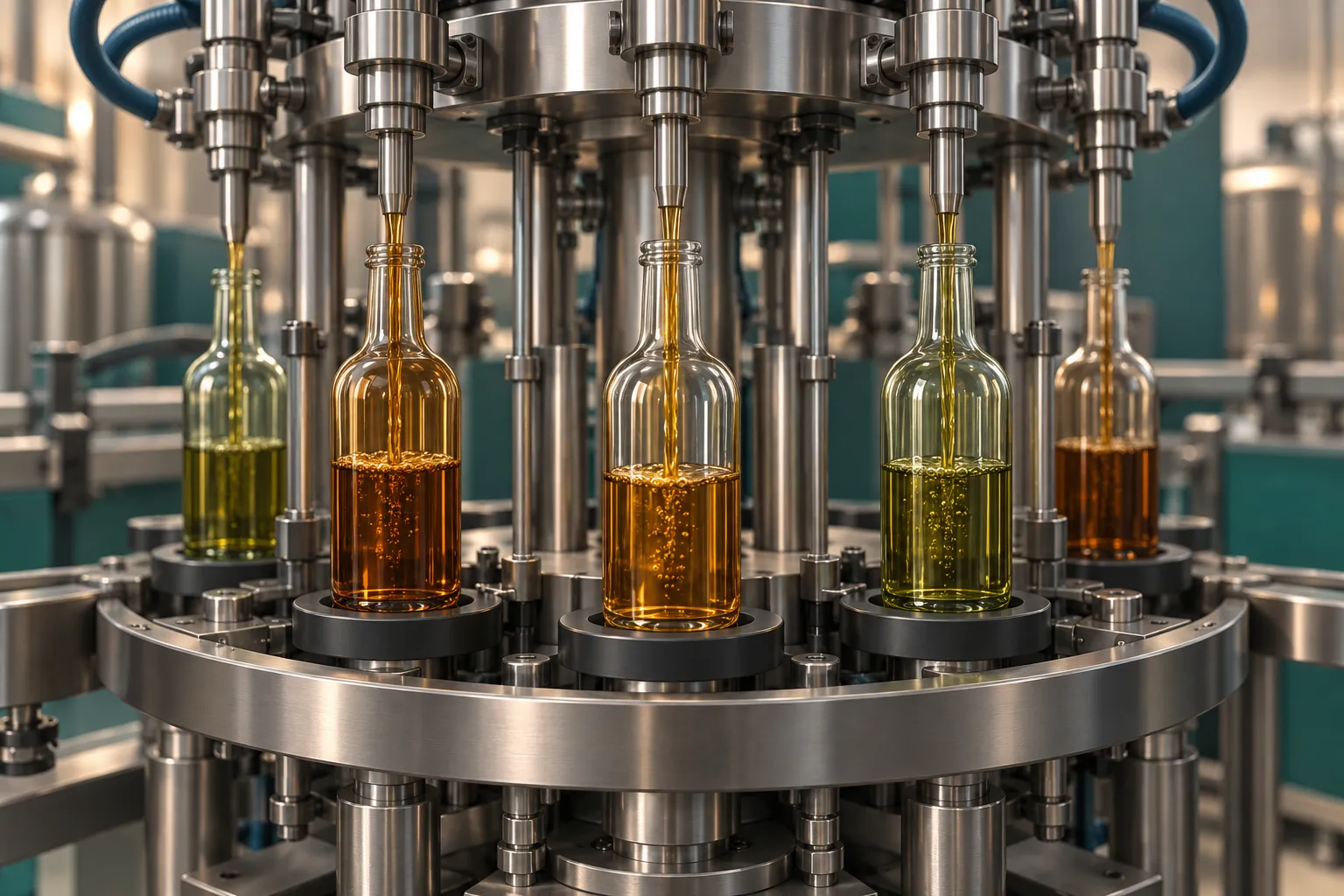
Glass Bottle Filling Machines: How to Compare Filling Principles
Compare gravity, vacuum, counter-pressure, piston and flowmeter filling for glass bottles by product, container and line fit, and learn what to ask suppliers.
Read the guide
Bottling Equipment RFQ Checklist: Comparing Supplier Proposals
How to write a bottling equipment RFQ so suppliers quote the same inputs, scope and performance basis, with a matrix for FAT, SAT, spares and warranty.
Read the guide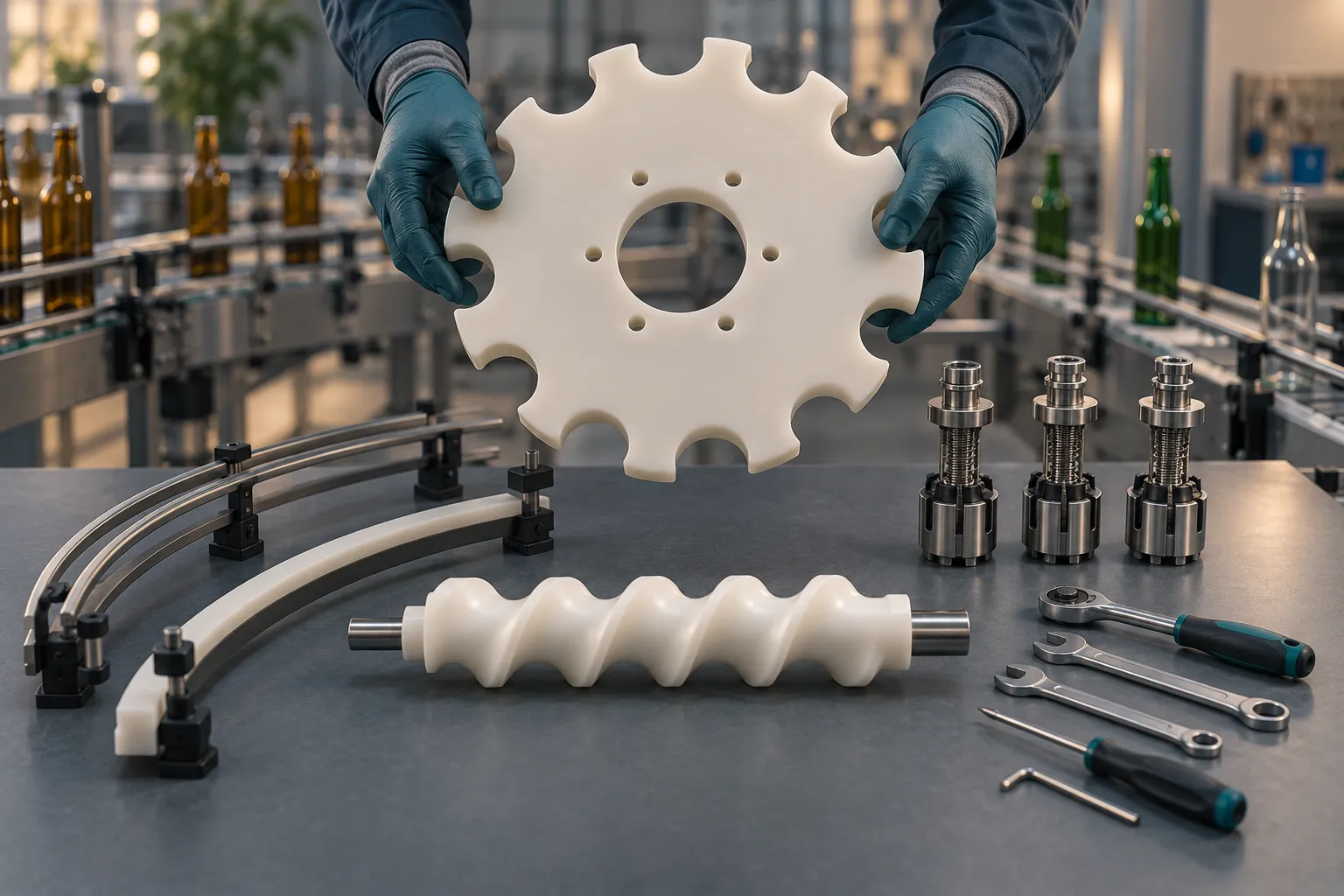
Bottling-Line Changeovers: What to Check Before Adding a New Bottle
Which change parts a new glass bottle touches, which bottle data to check, and how to run and document a trial before the bottle goes into production.
Read the guide